


When you’re switching fields, your resume can only say so much. The person reading it sees job titles from another industry and wonders why you’re applying. Your cover letter is where you answer that question before they have to ask it.
Short answer: a strong career change cover letter opens with the role you want and a one-line reason for the switch, then connects two or three transferable skills to the new job’s requirements with concrete examples, shows what you’ve done to prepare (courses, projects, volunteering), and closes with a confident, specific call to action. Keep it to one page, about 250 to 400 words.
What hiring managers want to know
A career changer’s letter has to answer four questions, ideally in this order:
- Why this field, and why now?
- What can you already do that matters here?
- What have you done to close the gap?
- Why this company in particular?
If your letter answers all four clearly, the unfamiliar job titles on your resume stop being a mystery and start looking like an asset.
A four-paragraph structure
Paragraph 1: the opening
Name the role, then give a short, positive reason for your move. Avoid explaining why you’re leaving your old career; focus on what draws you to the new one.
Example: “I’m applying for the Junior UX Designer role at Northfield. After six years as a primary school teacher, designing lessons that work for thirty different learners at once, I’ve moved into UX design because I want to apply the same thinking to digital products.”
Paragraph 2: transferable skills, with proof
Pick two or three skills from the job ad and show where you’ve used them. This is the heart of the letter.
| Skill in the job ad | Where a career changer might have used it |
|---|---|
| Stakeholder communication | Parent meetings, client calls, managing a team rota |
| Data analysis | Tracking sales targets, inventory, student results |
| Project management | Organising events, launching a new process, renovations |
| Customer empathy | Retail, hospitality, healthcare, support roles |
| Attention to detail | Accounting, lab work, compliance, editing |
Write each one as a mini story: situation, what you did, the result. Use real numbers when you have them and leave them out when you don’t.
Paragraph 3: how you’ve prepared
This paragraph turns “interested” into “credible”. Mention relevant courses, certifications, portfolio projects, freelance work, volunteering, or side projects. Link to a portfolio if you have one.
Example: “Over the past year I completed a UX certificate, redesigned the booking flow for a local yoga studio as a volunteer project, and ran five usability tests with real customers. You can see the case study in my portfolio.”
Paragraph 4: the close
Connect your goal to the company and ask for the next step. “I’d welcome the chance to talk about how my background in teaching could help your team design clearer onboarding for new users” is better than “I look forward to hearing from you.”
Translating your experience into the new field’s language
Career changers often undersell themselves because they describe their work in their old industry’s vocabulary. Before you write, read three or four job ads in your target field and note the words they repeat. Then translate:
- “Managed a classroom of 30 students” becomes “facilitated sessions for groups of 30 with different needs”.
- “Handled customer complaints at the front desk” becomes “resolved customer issues and escalated recurring problems to management”.
- “Kept the restaurant stock list” becomes “maintained inventory records and reduced waste by reordering based on usage”.
The underlying experience is the same; the framing is now relevant to the reader.
A short example letter
Dear Ms Tran,
I’m applying for the Operations Coordinator role at Lumen Logistics. After eight years in hospitality management, I’m moving into operations because the part of my job I enjoy most has always been building the systems behind a smooth service.
As a restaurant manager, I built the weekly staff rota for a team of 25, cut overtime by planning shifts around booking data, and introduced a stock-ordering spreadsheet that the whole team still uses. Your listing asks for scheduling, supplier coordination and reporting; I’ve done all three daily under real time pressure.
To formalise those skills, I recently completed a supply chain fundamentals course and am now learning SQL for reporting.
I’d love to discuss how my experience running busy, detail-heavy operations could support your growing warehouse team. Thank you for your time.
Kind regards, Minh Pham
A quick checklist before you send it
- The first paragraph names the exact job title and the company.
- Your reason for the switch is positive and fits in one sentence.
- Each transferable skill has a concrete example, not just a label.
- You mention at least one thing you’ve done to prepare for the new field.
- The letter uses the same key terms as the job ad, where they’re true for you.
- It fits on one page and uses the same fonts and header as your resume.
- You’ve addressed a real person if the ad or company website names one; otherwise “Dear Hiring Manager” is fine.
- Someone else has proofread it, or you’ve read it aloud slowly.
If you’re sending the letter as a file, save it as a PDF unless the employer asks for another format, and give it a clear file name such as “Firstname-Lastname-Cover-Letter.pdf”.
Mistakes career changers make
- Apologising for the switch. Phrases like “although I don’t have direct experience” lead with the weakness.
- Retelling the resume. The letter should explain and connect, not repeat bullet points.
- Being vague about motivation. “I’ve always wanted a change” says nothing. Name the specific work that draws you.
- One letter for every application. Reference the company and role by name, and mirror the job ad’s priorities.
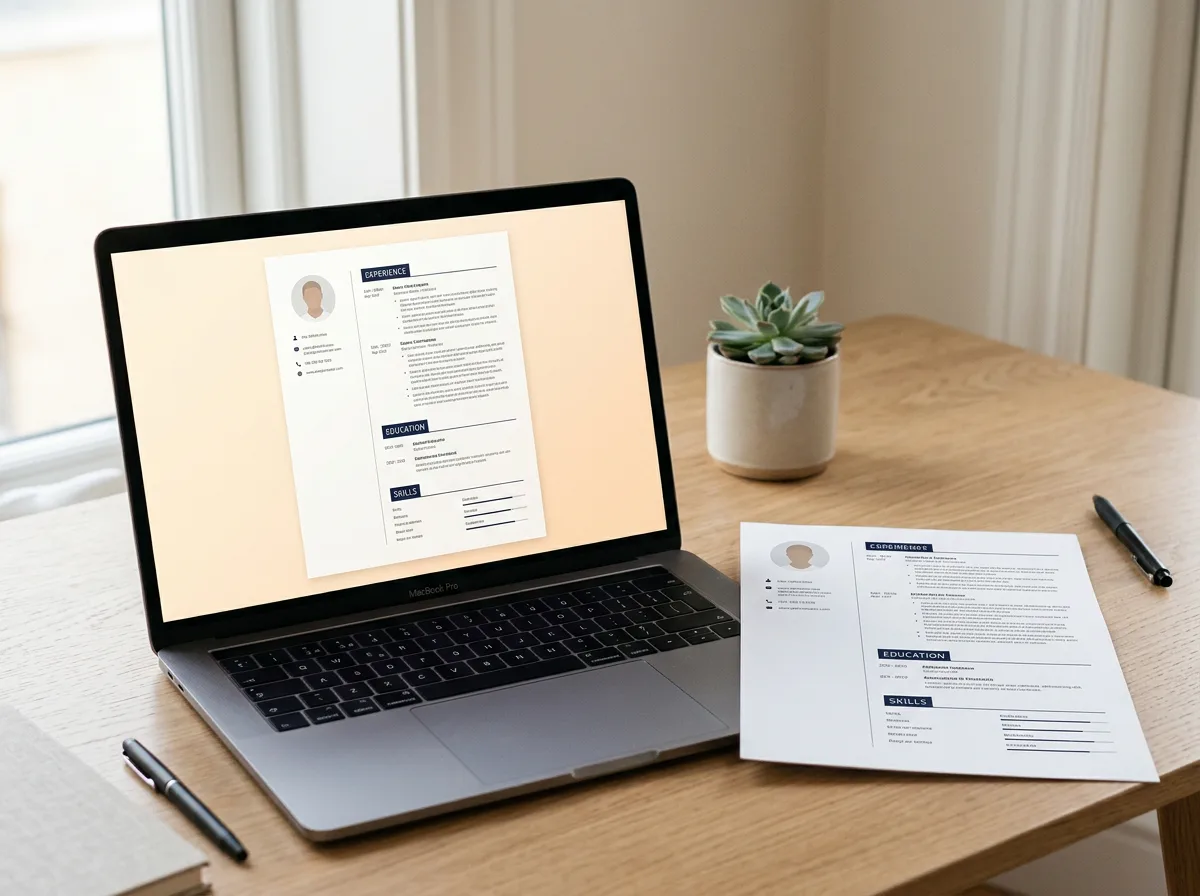
- Ignoring formatting. Match the letter’s design to your resume for a polished, consistent set. When you browse resume templates, check whether a matching cover letter page is included.
Your resume needs the same translation work. Our guide on how to quantify achievements on a resume shows how to turn everyday tasks into results, and the tips in how to make an ATS-friendly resume help both documents get past automated screening.
FAQ
How long should a career change cover letter be?
Aim for one page, roughly 250 to 400 words. That’s enough room for the four paragraphs above without asking the reader to scroll.
Should I explain why I’m leaving my old career?
Briefly, and positively. Focus on what attracts you to the new field rather than what you disliked about the old one.
What if I have no experience at all in the new field?
Lead with transferable skills and show concrete preparation: a course, a small project, volunteering or freelance work. Even one real project gives the reader something specific to evaluate.
Leave a Reply