


A blank work history makes the summary at the top of your resume feel impossible to write. It isn’t. A good entry-level summary doesn’t pretend you have experience you don’t; it tells the reader who you are, what you can already do, and what kind of role you’re aiming for, in two to four lines.
Short answer: to write a resume summary with no experience, combine three things in two to four sentences: your current status (student, graduate, career starter), two or three concrete skills backed by evidence from school, projects, volunteering or part-time work, and the type of role you want. Keep it specific, skip clichés like “hard-working team player”, and tailor it to each job ad.
Summary or objective: which one do you need?
You’ll see both terms. A traditional objective states what you want (“Seeking an entry-level marketing role”). A summary states what you offer. Recruiters care more about what you offer, so the best entry-level version is a hybrid: mostly summary, with one short clause about the role you’re targeting.
| Type | Focus | When it works |
|---|---|---|
| Objective | What you want | Rarely on its own; feels self-centred |
| Summary | What you offer | Best default, even with little experience |
| Hybrid | Offer plus target role | Ideal for students, graduates and career starters |
The three-part formula
Think of your summary as three building blocks. You can write them as separate sentences or fold them together.
1. Who you are right now
Start with an honest label: “Business administration graduate”, “Final-year computer science student”, “Self-taught graphic designer”, “Former retail associate moving into customer success”. Add one detail that makes it specific, such as your field of study, a certification, or a language you speak.
2. What you can already do, with proof
This is the part most people get wrong. Instead of listing traits, name skills and point to where you used them. Evidence can come from:
- Class projects, capstones or a thesis
- Internships, even short or unpaid ones
- Volunteering, clubs and student societies
- Part-time or seasonal jobs, freelancing or helping a family business
- Personal projects: a website, an app, a portfolio, a small online shop
- Courses and certifications you’ve completed
“Built a 20-page WordPress site for a student club” says far more than “passionate about web design”. Use real numbers only when you have them, such as the size of a team you coordinated or the number of events you helped run.
3. What you’re aiming for
Close with the role or contribution you want, phrased around the employer: “looking to support a sales team with research and CRM upkeep” reads better than “looking for a job where I can grow”.
Examples you can adapt
Use these as patterns, not copy-paste text. Swap in your own facts.
Recent graduate (marketing): Marketing graduate with hands-on experience planning social content for a 300-member university society and running its email newsletter. Comfortable with Canva, Google Analytics basics and copywriting. Seeking an entry-level marketing coordinator role where I can support campaign execution and reporting.
Student (part-time role): Second-year nursing student with first-aid certification and two summers of experience in a busy café, used to handling rushes calmly and keeping workstations clean. Looking for a part-time healthcare assistant position alongside my studies.
Career starter (IT support): Self-taught IT enthusiast who has built and repaired desktop PCs for friends and family and completed an online IT support certificate. Patient explainer with strong troubleshooting habits. Aiming for a help desk role on a team that values clear communication.
Career starter with retail background: Customer-focused retail associate with three years of front-line experience, moving into an office administration role. Organised, reliable with scheduling and cash handling, and confident with Excel and Google Workspace.
Step-by-step: write yours in 15 minutes
- Open the job ad and highlight the three skills or requirements it mentions most.
- Write down every place you’ve used each of those skills, however small: a project, a club, a job, a hobby.
- Pick your strongest piece of evidence for each skill.
- Draft your “who you are” opening in one line.
- Write one or two sentences that link the skills to the evidence.
- Finish with the role you want and how you’d help.
- Cut every word that doesn’t add information. Aim for 40 to 70 words.
- Read it out loud. If it sounds like it could describe anyone, add a more specific detail.
Mistakes to avoid
- Clichés with no proof. “Motivated self-starter” and “excellent communication skills” are invisible to most readers. Show the skill instead.
- Apologising for your inexperience. Phrases like “although I lack experience” draw attention to the gap. State what you have.
- Writing in the first person throughout. Resume summaries usually drop “I” (“Organised graduate with…”). Either style is acceptable, but be consistent.
- One summary for every job. Small tweaks to match the language of each ad make your resume more relevant to recruiters and to applicant tracking systems. Our guide to making an ATS-friendly resume explains why the wording matters.
- Making it too long. If it runs past four lines, move the extra detail into your projects or education section.
Where the summary sits on the page
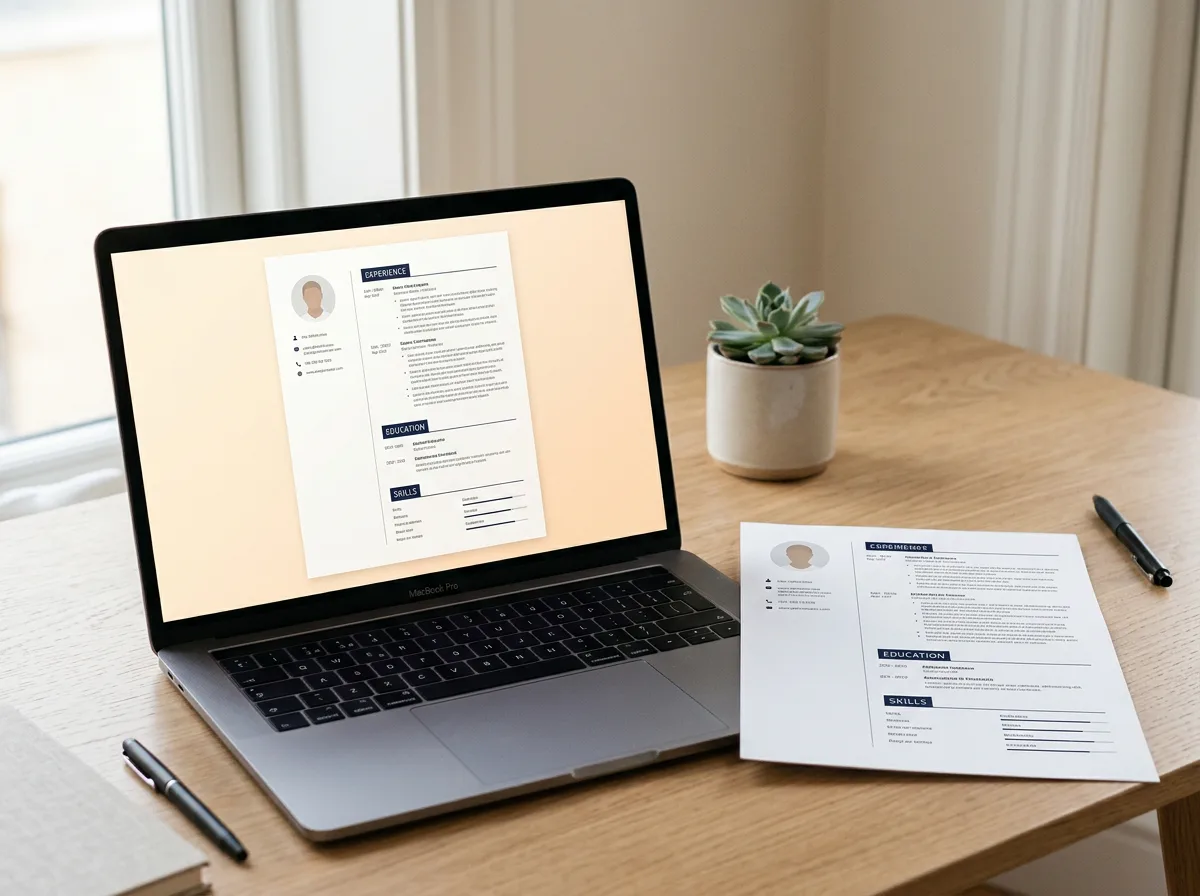
Place it directly under your name and contact details, above education or experience. When you have little work history, follow it with your education and a “Projects” or “Relevant experience” section so the evidence in your summary is easy to verify. A clean layout helps too: choose a template with a clearly marked summary block near the top, like the designs in our CV and resume templates collection.
If you’re also writing about achievements, read our guide on how to quantify achievements on a resume, which works just as well for school and volunteer projects.
FAQ
Should I include a resume summary if I have no experience at all?
Yes, in most cases. A short summary helps the reader understand what you’re applying for and frames your education and projects. If you’d rather not, a clear “Profile” line with your field and target role does a similar job.
How long should an entry-level resume summary be?
Two to four lines, or roughly 40 to 70 words. That’s long enough to give real evidence and short enough to be read in a few seconds.
Can I mention soft skills in my summary?
You can, but tie each one to an example. “Calm under pressure from weekend shifts in a busy restaurant” is believable; “great under pressure” on its own isn’t.
Leave a Reply